
Does the thought of an English class take you back to sentence diagramming in 9th grade?
[insert stifled scream here]
But wait – don’t be frightened!
Historically, language was taught as just another subject – memorize lists, conjugate verbs, repeat after the teacher. Today, however, the field of language teaching is moving towards more interactive and communicative forms of instruction, in which language is used, not just taught. In addition, in many countries, English is taught from the first grade, so potential English program participants often already know a lot of English, but are looking for opportunities to practice the language in meaningful contexts, and are enthusiastic to do so with native and/or highly proficient speakers.
For this reason, English programs no longer need to look like the traditional classroom, though there’s certainly a place for these programs sometimes. Instead, English may be integrated into all types of activities to help learners of all ages actively use English as they participate together. You might even find ways to add English to uniquely cultural events from your host culture.
This flexibility also means that you can go beyond just grammar to talk about deeper questions. You can share your beliefs and cultural values and find out about your students’ own values and beliefs, integrating media, news, literature, sports, and more.
Get your creative juices flowing as you consider just a few different types of programs, and then contact me to set up a consultation to make one (or more) of them a reality, or to dream up a program that best suits your context!
Adults
- Short Film Night: watch several short films and discuss each one, moving from surface-level to deeper questions. (I can provide a complete framework and film resources that fit your context.)
- Seminars: offer short seminars, taught in English, about relevant topics, such as budgeting, study skills, painting, and more.
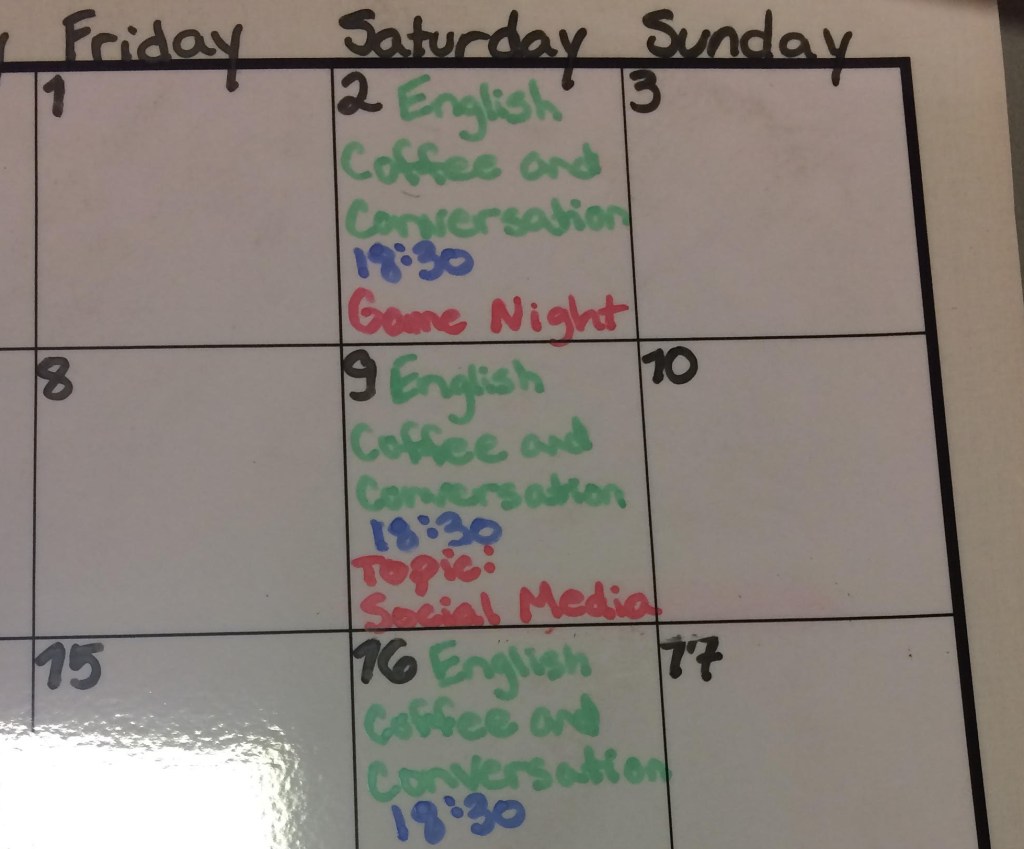
- Clubs for like-minded individuals: book club, hiking groups, game nights, philosophy discussion groups in the pub, and more! I’ve seen many of these different clubs in action and can help you create your own.
- Conversation Groups: Discuss a wide variety of topics, from adoption to the ethics of zoos, with some structured support to teach the vocabulary needed for the topic.
Children
- Storytime: read a children’s story and help students learn key vocabulary from the story.
- Bilingual preschool: prepare children for school in their first language, which they are still learning, AND help them build a basis in a new language, using sound principles for working with dual language learners (children learning more than one language at a time).
- Music Club: teach age-appropriate songs with motions and simple musical instruments.
 Logos Language Consulting